Navratri, “nine nights”, is the great festival of the Mother Goddess. Twice a year, in spring and autumn, Hindu families across India fast, pray and celebrate as the goddess Durga battles the demon Mahishasura for nine nights and triumphs on the tenth day. The autumn festival, Sharad Navratri, is the grandest of all. In 2026 it begins on Sunday, 11 October.
Navratri 2026 at a glance
| Day | Date | Tithi | Goddess | Read |
|---|---|---|---|---|
| 1 | Sun, 11 Oct | Pratipada · Ghatasthapana | Maa Shailaputri | Maa Shailaputri puja & story |
| 2 | Mon, 12 Oct | Dwitiya | Maa Brahmacharini | Maa Brahmacharini puja & story |
| 3 | Tue, 13 Oct | Tritiya | Maa Chandraghanta | Maa Chandraghanta puja & story |
| 4 | Wed, 14 Oct | Chaturthi | Maa Kushmanda | Maa Kushmanda puja & story |
| 5 | Thu, 15 Oct | Panchami | Maa Skandamata | Maa Skandamata puja & story |
| 6 | Fri, 16 Oct | Shashthi | Maa Katyayani | Maa Katyayani puja & story |
| 7 | Sat, 17 – Sun, 18 Oct | Saptami (two sunrises) | Maa Kalaratri | Maa Kalaratri puja & story |
| 8 | Mon, 19 Oct | Ashtami · Durga Ashtami | Maa Mahagauri | Maa Mahagauri puja & story |
| 9 | Tue, 20 Oct | Navami · Maha Navami | Maa Siddhidatri | Maa Siddhidatri puja & story |
| 10 | Tue, 20 Oct (afternoon) | Dashami · Dussehra | Vijayadashami |
Dates are calculated for New Delhi from the tithi at sunrise. This year Saptami touches two sunrises, so Navratri runs across ten days. Navami ends at 12:50 PM on 20 October and Dashami covers that afternoon, so many calendars keep Dussehra on 20 October; some regional calendars observe it on 21 October. Follow your family’s panchang.
Why we celebrate Navratri
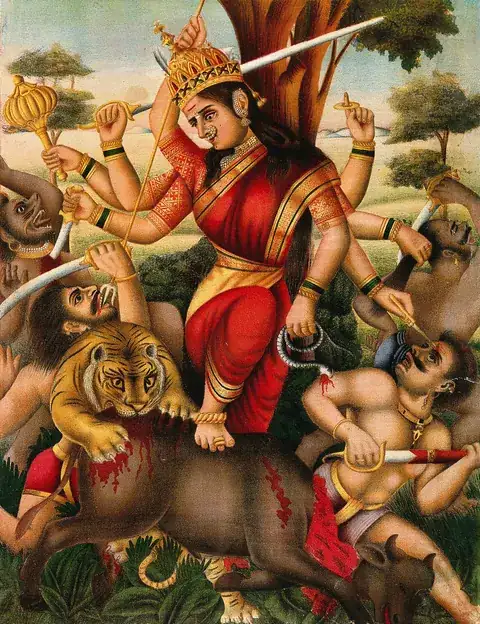
The Devi Mahatmya (Durga Saptashati) tells how the buffalo-demon Mahishasura won a boon that no man or god could kill him, and drove the devas from heaven. From the combined radiance of Brahma, Vishnu, Shiva and all the gods rose the goddess Durga, armed with each of their weapons and riding a lion. She fought Mahishasura for nine days and nights and killed him on the tenth. Navratri celebrates those nine nights; Vijayadashami, the day of victory, celebrates the triumph.
In North India the same season also remembers Lord Rama, who worshipped the goddess before his battle with Ravana. That is why Ramlila is staged through Navratri and Ravana’s effigy burns on Dussehra.
The nine forms of Durga (Navadurga)
Each night is dedicated to one form of the goddess, and together they trace a journey: from the goddess as the daughter of the mountains, through austerity, courage and creation, to motherhood, battle, purity and finally the giver of all powers.
- Shailaputri, daughter of the Himalaya, riding the bull Nandi
- Brahmacharini, the ascetic with mala and water pot
- Chandraghanta, with the half-moon bell on her forehead
- Kushmanda, who created the universe with her smile
- Skandamata, mother of Kartikeya
- Katyayani, the warrior who slew Mahishasura
- Kalaratri, the dark one who destroys all fear
- Mahagauri, radiant and pure white
- Siddhidatri, giver of every siddhi
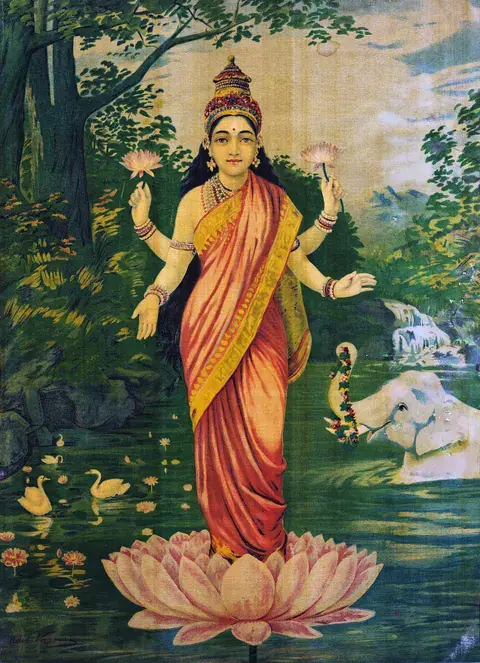
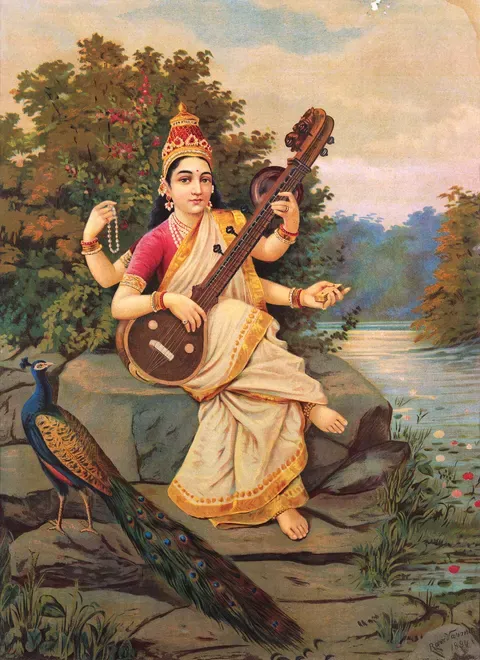
The three sets of three nights are also traditionally offered to Durga (strength to remove what is negative), Lakshmi (prosperity) and Saraswati (knowledge).
Ghatasthapana at home, step by step
- On the morning of Sunday, 11 October, bathe, clean the puja space and wear fresh clothes.
- Spread clean soil in a wide clay pot or on a plate and sow barley (jau) seeds in it. They will sprout over the nine days.
- Fill a clay or copper kalash with water; add a coin, supari, a little rice and durva. Tie a red thread (mauli) around its neck.
- Place five or seven mango leaves in its mouth, and on top a coconut wrapped in red cloth with mauli.
- Set the kalash on the sown soil, apply a swastika in kumkum, and invoke the goddess. Place her picture beside it.
- Light a ghee diya. Many families keep an akhand jyoti, a lamp that burns for all nine days.
- Offer red flowers, kumkum, akshat and a sweet, and recite the Durga Chalisa or a chapter of the Durga Saptashati.
- Sing the aarti “Jai Ambe Gauri” morning and evening for all nine days.
Avoid starting during Rahu Kaal. On 11 October in New Delhi, Rahu Kaal is in the late afternoon, so any time in the morning after sunrise works well. See today’s panchang for the day’s timings.
Fasting during Navratri
People fast in many ways: all nine days, the first and last days, or only on Ashtami. A typical phalahar fast allows fruit, milk and curd, sabudana, kuttu and singhara atta, rajgira, potatoes, sweet potato, makhana, nuts and sendha namak. Grains, pulses, onion, garlic, ordinary salt, alcohol and non-vegetarian food are avoided. The fast is broken after the kanya pujan on Ashtami or Navami, or on Dashami.
Kanya pujan
On Ashtami (19 October) or Navami (20 October), families invite nine young girls, seen as the nine forms of the goddess, and often one boy as Langur or Bhairav. Their feet are washed, a red thread tied on their wrists and tilak applied; they are served halwa, puri and kala chana, and sent home with a small gift and the family’s blessings.
Navratri across India
Gujarat dances garba and dandiya around the garbo lamp every night. Bengal, Assam and Odisha celebrate the last days as Durga Puja, with pandals, dhunuchi dance and the immersion on Dashami. In Karnataka, Mysuru’s Dasara procession is famous; Tamil Nadu and Andhra homes arrange a golu of dolls on steps; and in Kerala books and tools are placed before Saraswati on Navami for Ayudha Puja and children begin writing on Vijayadashami (Vidyarambham).
Frequently asked questions
When does Navratri start in 2026?
Sharad Navratri 2026 begins on Sunday, 11 October, with Ghatasthapana on Ashwin Shukla Pratipada. Durga Ashtami is on Monday, 19 October, Maha Navami on Tuesday, 20 October, and Vijayadashami (Dussehra) follows. Exact muhurat times depend on your city.
Why is Navratri ten days long in 2026?
Navratri follows tithis, not calendar days. In 2026 the Saptami tithi is present at sunrise on two days (17 and 18 October), so the nine tithis of Navratri stretch over ten days. When a tithi is skipped instead, Navratri can be as short as eight days.
What is Ghatasthapana?
Ghatasthapana (also called Kalash Sthapana) is the ritual that begins Navratri. A clay or copper kalash filled with water is placed on a bed of soil sown with barley (jau), topped with mango leaves and a coconut, and the goddess is invoked in it. It is best done in the morning of Pratipada, avoiding Rahu Kaal.
Can I eat on Navratri fasts?
Yes. Most people keep a phalahar fast rather than a waterless one. Fruit, milk, curd, sabudana, singhara (water chestnut) flour, kuttu (buckwheat) flour, rajgira, potatoes and sendha namak (rock salt) are allowed. Grains, lentils, onion, garlic, and ordinary salt are avoided. Elders, the unwell and pregnant women should fast only as their health allows.
When should kanya pujan be done?
Kanya pujan, the worship of young girls as forms of the goddess, is done on Ashtami (19 October 2026) or Navami (20 October 2026), according to family custom. Usually nine girls, and one little boy as Langur (Bhairav), are fed halwa, puri and kala chana and given a small gift.