Hindu Gods & Goddesses
देवी-देवता
Their stories, mantras, favourite offerings, aartis and the temples where they are worshipped.
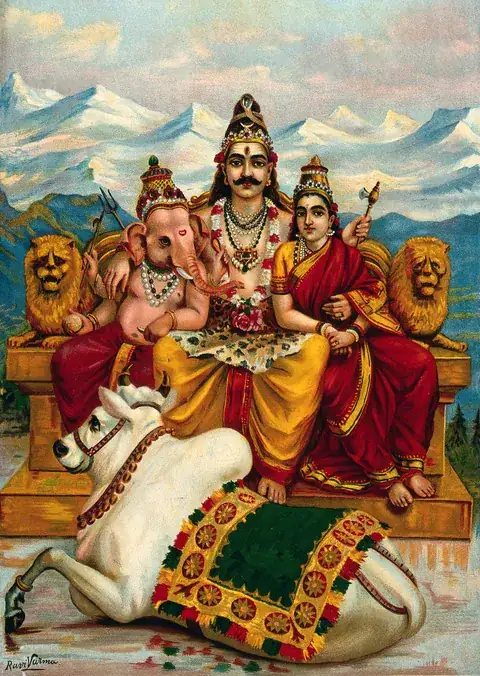
Raja Ravi Varma chromolithograph, Wellcome Collection
Lord Shivaभगवान शिव
The destroyer and transformer in the Trimurti, the ascetic of Mount Kailash, remembered for his compassion as much as for his cosmic dance.
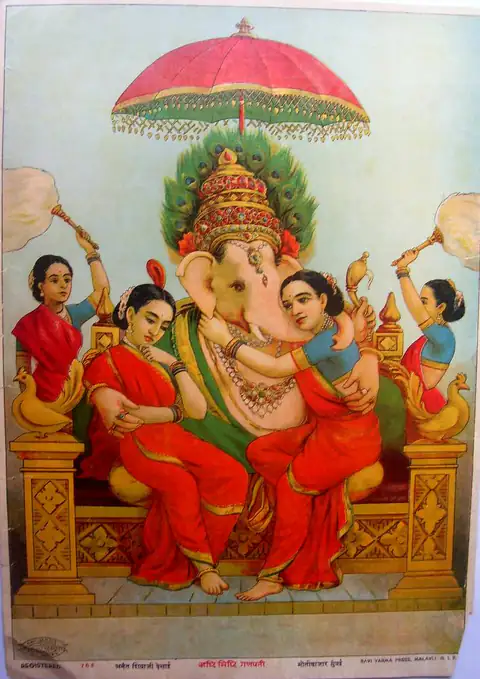
Ravi Varma Press, c. 1910
Lord Ganeshaश्री गणेश
The remover of obstacles and lord of beginnings, worshipped first before every puja, journey and new venture.
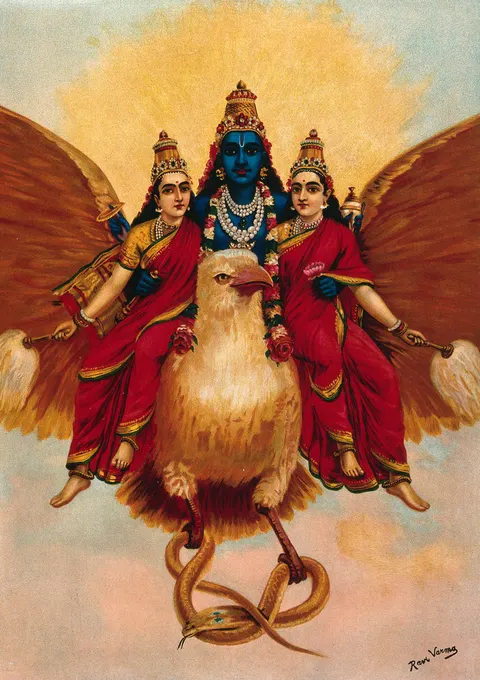
Raja Ravi Varma chromolithograph, Wellcome Collection
Lord Vishnuभगवान विष्णु
The preserver of the universe, who descends as avatars such as Rama and Krishna whenever dharma is in danger.
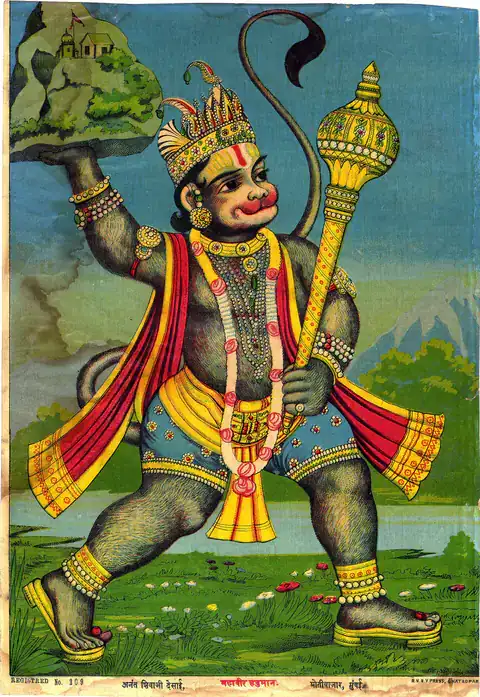
Ravi Varma Press, 1910s
Lord Hanumanश्री हनुमान
The mighty devotee of Lord Rama: strength and humility in one form, and the first name many Hindus call on in times of fear or trouble.
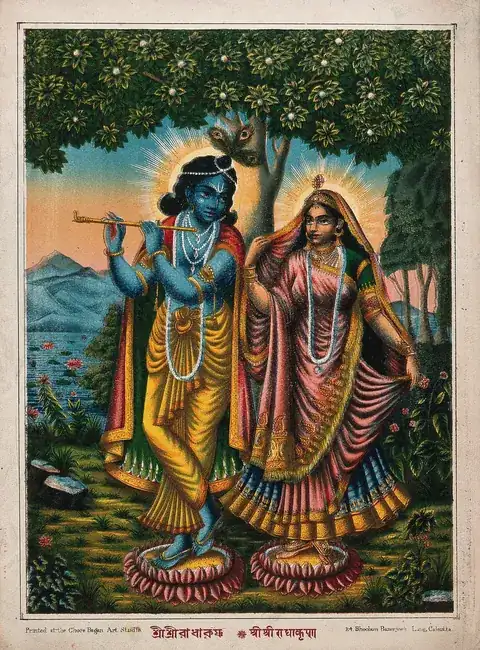
Chromolithograph, Wellcome Collection
Lord Krishnaश्री कृष्ण
The eighth avatar of Vishnu: the butter-stealing child of Gokul, the flute-player of Vrindavan, and the teacher of the Bhagavad Gita on the battlefield of Kurukshetra.
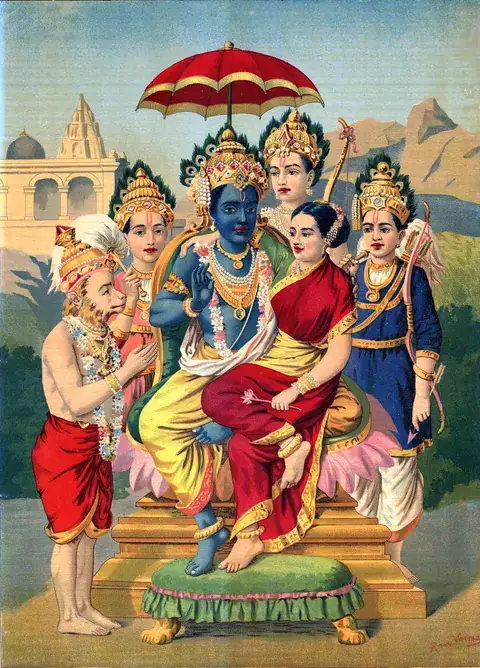
Raja Ravi Varma lithograph
Lord Ramaश्री राम
The seventh avatar of Vishnu and hero of the Ramayana: the ideal son, husband and king, remembered as Maryada Purushottam, the one who never stepped outside dharma.
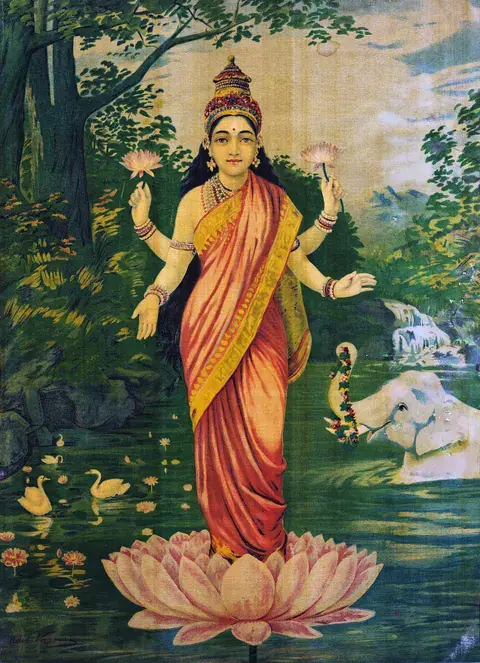
Raja Ravi Varma, Ravi Varma Press
Goddess Lakshmiमाँ लक्ष्मी
The goddess of wealth, prosperity and good fortune, consort of Lord Vishnu, who is welcomed into every home with lamps and rangoli on Diwali night.
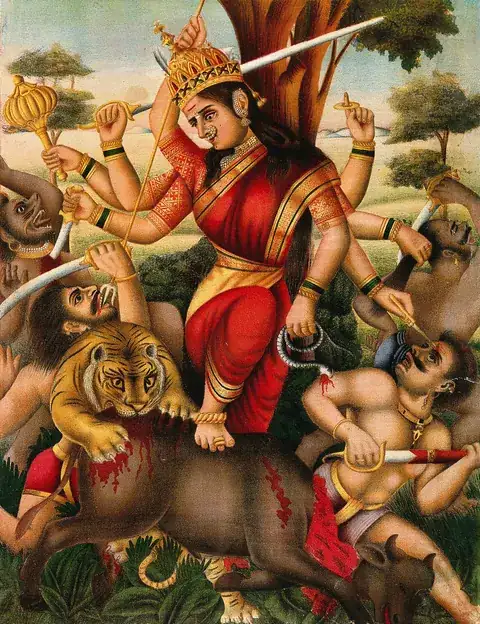
Chromolithograph, Wellcome Collection
Goddess Durgaमाँ दुर्गा
The invincible Mother Goddess who rides a lion and destroyed the buffalo demon Mahishasura; the form of Shakti worshipped with great devotion through the nine nights of Navratri.
Raja Ravi Varma
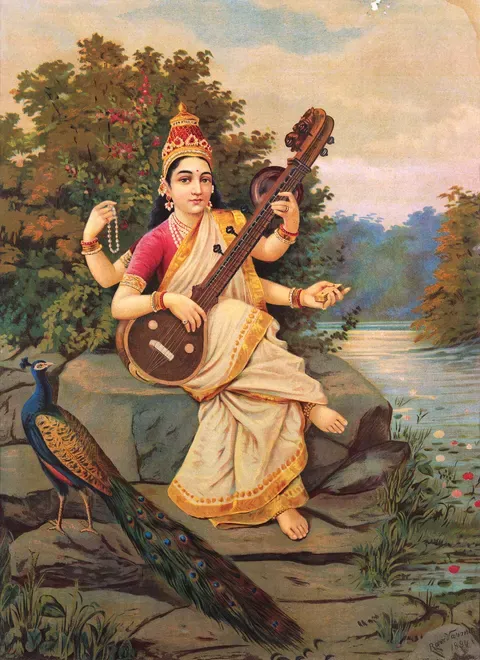
Goddess Saraswatiमाँ सरस्वती
The goddess of knowledge, music, speech and the arts, dressed in white and playing the veena; every student, musician and writer's first prayer.
At a glance
| Deity | Special day | Mantra | Vahana | Consort | Main festival |
|---|---|---|---|---|---|
| Shiva भगवान शिव | Monday (Somvar) | ॐ नमः शिवाय Om Namah Shivaya | Nandi the bull | Parvati | Maha Shivratri, Sawan Somvar |
| Ganesha श्री गणेश | Wednesday (Budhvar) | ॐ गं गणपतये नमः Om Gam Ganapataye Namah | Mooshak the mouse | Riddhi and Siddhi | Ganesh Chaturthi |
| Vishnu भगवान विष्णु | Thursday (Guruvar) | ॐ नमो भगवते वासुदेवाय Om Namo Bhagavate Vasudevaya | Garuda the eagle | Lakshmi | Ekadashi, Vaikuntha Ekadashi |
| Hanuman श्री हनुमान | Tuesday (Mangalvar) and Saturday (Shanivar) | ॐ हं हनुमते नमः Om Ham Hanumate Namah | None | (a lifelong brahmachari) | Hanuman Jayanti |
| Krishna श्री कृष्ण | Wednesday (Budhvar) and Ekadashi | ॐ नमो भगवते वासुदेवाय Om Namo Bhagavate Vasudevaya | Garuda | Radha, Rukmini | Janmashtami |
| Rama श्री राम | Thursday (Guruvar) and Navami tithi | श्री राम जय राम जय जय राम Shri Ram Jai Ram Jai Jai Ram | None | Sita | Ram Navami, Diwali |
| Lakshmi माँ लक्ष्मी | Friday (Shukravar) | ॐ श्रीं महालक्ष्म्यै नमः Om Shreem Mahalakshmyai Namah | The owl | Vishnu | Diwali, Dhanteras |
| Durga माँ दुर्गा | Tuesday (Mangalvar) and Friday (Shukravar) | ॐ दुं दुर्गायै नमः Om Dum Durgayai Namah | The lion | Shiva (as Parvati) | Navratri, Durga Puja |
| Saraswati माँ सरस्वती | Thursday (Guruvar), and Basant Panchami each year | ॐ ऐं सरस्वत्यै नमः Om Aim Saraswatyai Namah | The swan | Brahma | Basant Panchami |
One truth, many forms
People sometimes ask how Hindus can worship so many gods. The simplest answer is the one your grandmother might give: there is one divine reality, and it shows itself in many forms so that each of us can relate to it in our own way. The Rig Veda puts it beautifully: ekam sat vipra bahudha vadanti, "truth is one, the wise call it by many names."
At the centre are the Trimurti: Brahma who creates, Vishnu who preserves and Shiva who transforms. Beside them stand the Tridevi, the three great goddesses: Saraswati of knowledge, Lakshmi of prosperity and Parvati, who as Durga is the fierce protector. And there are the deities many families feel closest to, like Ganesha, whom everyone worships first, and Hanuman, whom everyone calls on in trouble.
Most homes have an ishta devta, a chosen deity, and a kul devta or kul devi, the family's ancestral deity, often worshipped at a particular village temple. On each page above you'll find that deity's story, what their symbols mean, their mantra, their special day and a simple way to worship them at home.
The seven days and their deities
| Day | Ruled by | Worshipped |
|---|---|---|
| Sunday (Ravivar) | Sun (Surya) | Surya Dev |
| Monday (Somvar) | Moon (Chandra) | Shiva |
| Tuesday (Mangalvar) | Mars (Mangal) | Hanuman, Durga |
| Wednesday (Budhvar) | Mercury (Budh) | Ganesha, Krishna |
| Thursday (Guruvar) | Jupiter (Guru) | Vishnu, Sai Baba, Brihaspati |
| Friday (Shukravar) | Venus (Shukra) | Lakshmi, Durga, Santoshi Mata |
| Saturday (Shanivar) | Saturn (Shani) | Shani Dev, Hanuman |
The ten avatars of Vishnu (Dashavatara)
Whenever dharma declines, Vishnu descends to restore it. Tradition counts ten principal avatars, one for each great crisis of the world:
- Matsya मत्स्य: the fish, who saved Manu and the Vedas from the great flood
- Kurma कूर्म: the tortoise, who held Mount Mandara on his back during the churning of the ocean
- Varaha वराह: the boar, who lifted the earth out of the cosmic waters
- Narasimha नरसिंह: the man-lion, who protected the child Prahlad from Hiranyakashipu
- Vamana वामन: the dwarf, who covered the three worlds in three steps and humbled King Bali
- Parashurama परशुराम: the warrior-sage with the axe
- Rama राम: the prince of Ayodhya and hero of the Ramayana
- Krishna कृष्ण: the teacher of the Bhagavad Gita
- Buddha बुद्ध: in many lists; some traditions name Balarama here instead
- Kalki कल्कि: the avatar yet to come, at the end of the Kali Yuga
Hindu gods: common questions
How many gods are there in Hinduism?
People often quote "33 crore devatas", but the Sanskrit word koti can mean both "crore" and "type". Many scholars read it as 33 types of devas: 12 Adityas, 11 Rudras, 8 Vasus, and Indra and Prajapati. Beyond the numbers, most Hindu traditions hold that all the gods are forms of one supreme reality, Brahman.
Who is the supreme god in Hinduism?
It depends on the tradition. Vaishnavas worship Vishnu (and his avatars Rama and Krishna) as supreme, Shaivas worship Shiva, and Shaktas worship the Mother Goddess. The Smarta tradition worships five deities equally (Shiva, Vishnu, Devi, Ganesha and Surya) as forms of the one Brahman.
What is the Trimurti?
The Trimurti is the three-fold form of the divine: Brahma the creator, Vishnu the preserver and Shiva the transformer or destroyer. Their consorts, Saraswati, Lakshmi and Parvati, are together called the Tridevi.
Which god should I worship first?
Lord Ganesha is worshipped first at the start of every puja, ceremony or new venture, because he removes obstacles. After that, families worship their ishta devta or kul devta, the chosen or ancestral deity of the family.