Maa Varahi Devi: Who She Is, Her Story, Temples and Worship
11 October 2026 · World of Hindus
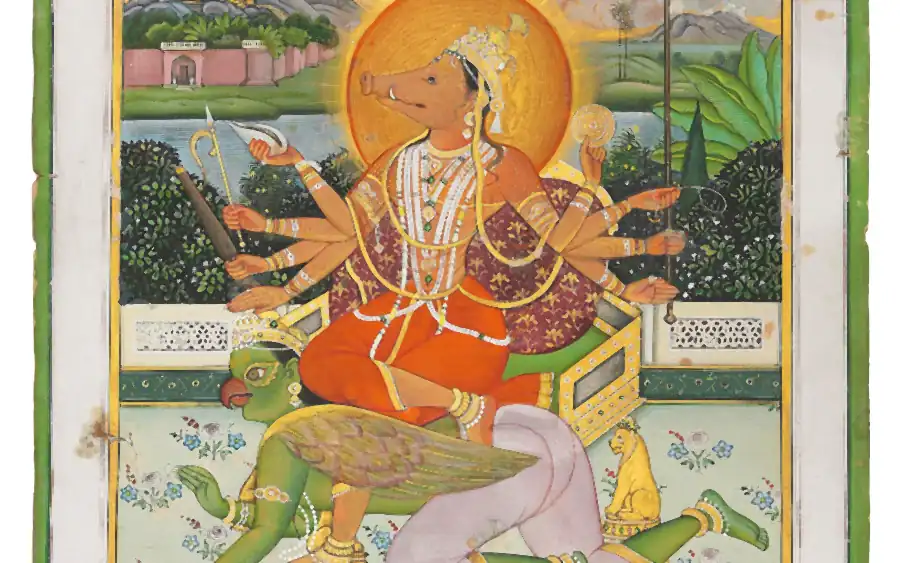
Varahi Devi is the boar-faced mother goddess, one of the Saptamatrikas (seven mothers) of Hinduism and the power (shakti) of Varaha, the boar avatar of Lord Vishnu. Fierce to look at and fiercely protective, she is worshipped as a guardian against enemies, fear and obstacles, and in the Shakta tradition she is the commander of Goddess Lalita’s army.
Varahi Devi at a glance
| Name | Varahi (वाराही), also Dandanatha, Dandini, Panchami |
| Group | One of the Saptamatrikas (seven mother goddesses) |
| Shakti of | Varaha, Vishnu’s boar avatar |
| Form | Boar’s face, woman’s body; often seated on a buffalo, lion or Garuda |
| Holds | Plough and pestle (musala), sword, shield, noose |
| Role | Commander (Dandanatha) of Lalita Tripurasundari’s army |
| Tithi | Panchami (fifth day) is especially hers |
| Festival | Varahi Navaratri, during Ashadha Gupt Navratri (June–July) |
Who are the Saptamatrikas?
The Devi Mahatmya tells how, in the goddess’s battle against the demon Raktabeej, the great gods sent out their own powers in female form to fight beside her. These are the Saptamatrikas: Brahmani (of Brahma), Maheshvari (of Shiva), Kaumari (of Kartikeya), Vaishnavi (of Vishnu), Varahi (of Varaha), Indrani (of Indra) and Chamunda. Each carries her lord’s weapons and rides his vehicle. Varahi, with Varaha’s boar face and strength, is among the most powerful of them.
Varahi as Lalita’s commander
In the Lalita Sahasranama and the Shakta tradition of Sri Vidya, Varahi is Dandanatha, the general who leads the goddess Lalita Tripurasundari’s army against the demon Bhandasura. She is called Panchami because she is the fifth of the matrikas, and Panchami tithi is sacred to her. Devotees who worship Lalita often worship Varahi as her protector and minister of war.
Her form and what it means
- The boar’s face: the power of Varaha, who dived into the cosmic ocean and lifted the earth on his tusks. Varahi likewise lifts her devotees out of danger.
- The plough and pestle: her link with the earth and agriculture; in many villages she is a goddess of the fields and harvest.
- Weapons: sword, shield and noose to cut through enemies and bind negativity.
- The night: she is a goddess of the dark hours, the protector who stands guard while the world sleeps.
Famous Varahi temples
- Patal Varahi temple, Varanasi: one of Kashi’s oldest goddess shrines, near Manmandir Ghat. The deity sits in an underground chamber and is seen through openings in the floor; the temple is open only for a short time in the early morning.
- Varahi Amman, Thanjavur: a shrine within the great Brihadeeswarar temple complex, where devotees light lamps on Panchami.
- Varahi Deula, Chaurasi (Odisha): a 9th-century temple near Puri with an exquisite image of the goddess holding a fish and a cup.
- Uttarakhand and Himachal also have village shrines of Varahi, such as the Devidhura temple in Champawat, known for its Bagwal festival on Raksha Bandhan.
How devotees worship Varahi
Most households worship Varahi simply, as a form of the protecting Mother: lighting a ghee lamp on Panchami or in the evening, offering red flowers, and praying for protection from enemies, illness and fear. Her deeper worship belongs to the tantric and Sri Vidya traditions and is done at night with specific mantras; that should be learned from a qualified guru, not from the internet. A simple prayer for everyone is ॐ वाराह्यै नमः (Om Varahyai Namah).
Varahi and the other forms of the Mother
Varahi is one of many forms of the one Goddess. Read about Maa Durga and her nine Navratri forms, the fierce Maa Kalaratri, and the Mahavidya Maa Bagalamukhi.
Sources: Devi Mahatmya (Markandeya Purana), Lalita Sahasranama (Brahmanda Purana), temple traditions of Varanasi, Thanjavur and Chaurasi. Image: “The Goddess Varahi seated on Garuda”, public domain, Wikimedia Commons.

Frequently asked questions
Who is Varahi Devi?
Varahi is one of the Saptamatrikas, the seven mother goddesses who are the powers (shaktis) of the great gods. She is the shakti of Varaha, the boar avatar of Vishnu, and is shown with a boar's face and a woman's body. In the Shakta tradition she is also the commander-in-chief of Goddess Lalita Tripurasundari's army.
Why is Varahi worshipped at night?
Varahi is a fierce, protective goddess associated with the night and with tantric worship. Her temples traditionally hold their main worship in the dark hours or very early morning, and devotees pray to her for protection from enemies and fear.
Which is the famous Varahi temple?
Well-known Varahi shrines include the Varahi Amman shrine inside the Brihadeeswarar temple complex at Thanjavur, the Patal Varahi temple in Varanasi (open only for a short time in the early morning), and the 9th-century Varahi Deula at Chaurasi in Odisha.
When is Varahi Navaratri?
Varahi Navaratri, popular in Tamil Nadu and Andhra Pradesh, is celebrated during the Ashadha Gupt Navratri, the nine nights from Ashadha Shukla Pratipada, usually in June or July.