Maa Bagalamukhi: The Eighth Mahavidya, Her Story, Temples and Worship
11 October 2026 · World of Hindus
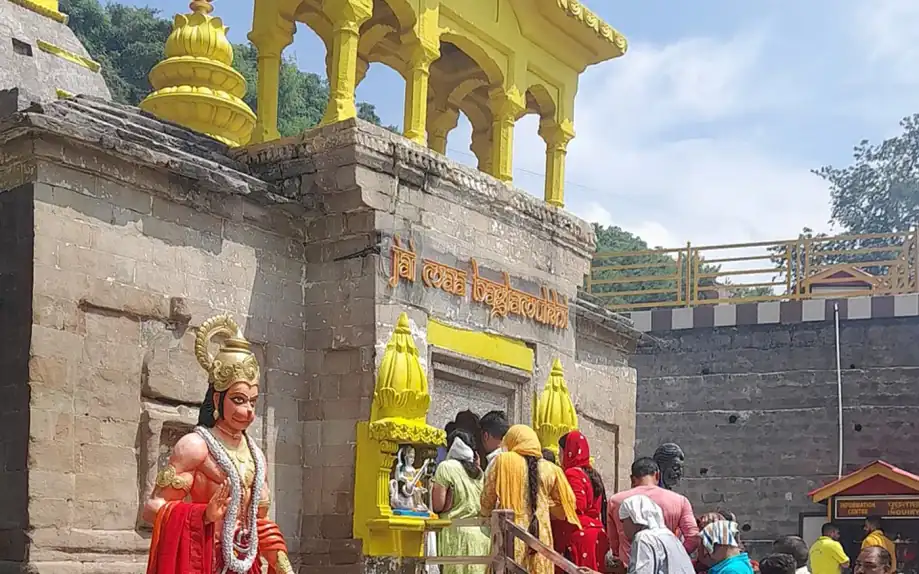
Maa Bagalamukhi is the eighth of the ten Mahavidyas, the great wisdom goddesses of the Shakta tradition. She is the goddess of stambhana, the power to stop: to still an enemy’s tongue, a storm, or a racing mind. Golden and dressed in yellow, she is also called Pitambara, “the one in yellow robes”, and is worshipped for victory in disputes, protection from enemies and calm in the face of trouble.
Bagalamukhi at a glance
| Name | Bagalamukhi (बगलामुखी), also Pitambara, Brahmastra Vidya |
| Group | Eighth of the ten Mahavidyas |
| Power | Stambhana: stopping, stilling, silencing |
| Colour | Yellow (pita) |
| Form | Golden, holding a demon’s tongue in her left hand and a club in her right |
| Seat | A golden throne amid a lake of yellow, or on a corpse in tantric images |
| Jayanti | Vaishakha Shukla Ashtami (April–May) |
| Main temples | Datia (MP), Bankhandi (HP), Nalkheda (MP) |
The ten Mahavidyas
The Mahavidyas are ten forms of the Divine Mother, each a different face of wisdom and power: Kali, Tara, Tripura Sundari, Bhuvaneshvari, Bhairavi, Chhinnamasta, Dhumavati, Bagalamukhi, Matangi and Kamala. One story says that when Sati wished to attend her father Daksha’s yagna and Shiva forbade it, she revealed these ten forms, filling every direction, and Shiva gave way. Bagalamukhi is the eighth.
The legend of the storm
In the Satya Yuga, a terrible storm arose that threatened to destroy all creation. The gods turned to Vishnu, who went to the Haridra Sarovar, the lake of turmeric, in Saurashtra, and performed intense tapasya to the Mother. Pleased, the goddess rose from the yellow waters as Bagalamukhi and stilled the storm with her power of stambhana. Another tale tells of the demon Madan, whose words came true whatever he said; Bagalamukhi seized his tongue and silenced him, and that is the image of her holding a demon’s tongue.
What her symbols mean
- Holding the tongue: she stops harmful speech: slander, lies, curses and arguments. Devotees pray to her before court cases and disputes.
- The club: the strength to strike down obstacles.
- Yellow: the colour of turmeric, of the sun and of auspiciousness; also the colour of the Haridra lake she rose from.
- Stambhana: at the deepest level, the power to still the mind itself, the first step in meditation.
Famous Bagalamukhi temples
- Pitambara Peeth, Datia (Madhya Pradesh): the best-known seat of the goddess, founded by the saint known as Swamiji Maharaj in the 1930s, with a Dhumavati shrine in the same complex. It is visited by people of every walk of life, including politicians before elections.
- Bagalamukhi temple, Bankhandi (Himachal Pradesh): on the Kangra–Dharamshala road, painted yellow, with havans held through the day.
- Maa Bagalamukhi temple, Nalkheda (Madhya Pradesh): on the Lakhundar river in Agar Malwa district, an ancient siddha peeth with a three-faced image of the goddess.
How devotees worship Bagalamukhi
For everyday devotion: on a Tuesday or Thursday, or on Ashtami, wear yellow, offer yellow flowers, turmeric, chana dal and besan laddoo or a yellow sweet, light a ghee lamp, and pray to the goddess for calm and protection. Her havans and mantra-sadhana belong to the tantric tradition and use specific rules, so they should be done only under a qualified guru or at her temples by their priests.
Bagalamukhi and the Divine Mother
Bagalamukhi is one face of the same Mother who is Durga in Navratri, Lakshmi in prosperity and Saraswati in learning. Read also about Maa Varahi, the fierce protector among the Saptamatrikas, and Gayatri Devi, the mother of the Vedas.
Sources: Shakta tradition and Mahavidya texts as preserved at Datia and Nalkheda; temple histories. Image: Bagalamukhi temple, by Dvellakat, Wikimedia Commons, CC BY-SA 4.0.

Frequently asked questions
Who is Bagalamukhi Devi?
Bagalamukhi is the eighth of the ten Mahavidyas, the wisdom goddesses of the Shakta tradition. She is the power of stambhana, the ability to stop or paralyse, and is worshipped to silence enemies, win disputes and still the restless mind. Because she is always dressed in yellow, she is also called Pitambara.
Why is Bagalamukhi associated with yellow?
Her legend says she rose from the Haridra (turmeric) lake, and she is described as golden, dressed in yellow and fond of yellow offerings. Devotees wear yellow, use a turmeric mala and offer yellow flowers, chana dal and sweets in her worship.
Where are the main Bagalamukhi temples?
The best known are the Pitambara Peeth at Datia in Madhya Pradesh, the Bagalamukhi temple at Bankhandi near Kangra in Himachal Pradesh, and the Maa Bagalamukhi temple at Nalkheda in Agar Malwa district, Madhya Pradesh.
When is Bagalamukhi Jayanti?
Bagalamukhi Jayanti is celebrated on Vaishakha Shukla Ashtami, usually in April or May, with special havans at her temples.