Hanuman Ansh and the Real Life of Neem Karoli Baba
26 September 2026 · World of Hindus
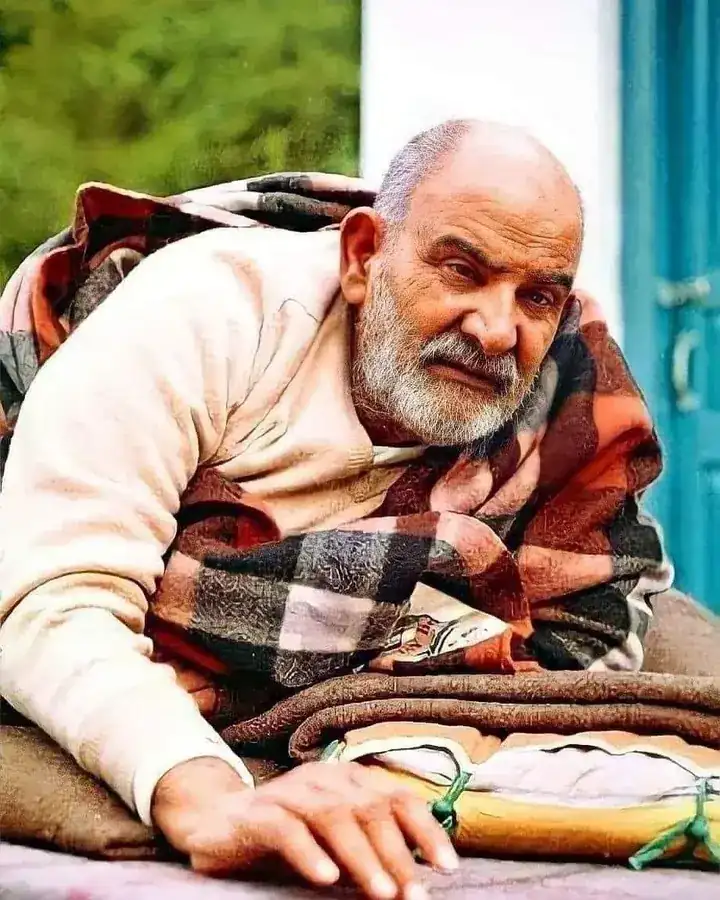
If someone had told you in July that the biggest surprise at the Hindi box office this year would be a film about a sadhu in a plaid blanket, made for less than the catering bill of a normal Bollywood shoot, you would have smiled politely. And yet here we are.
Hanuman Ansh, a film about the early life of Neem Karoli Baba, opened quietly on 7 August 2026. Six weeks later it had crossed ₹300 crore worldwide. Families are going in groups, grandparents included, and a lot of people who had never heard the name “Kainchi Dham” are now asking how to get there.
So let’s talk about both things: what happened with the film, and, more importantly, who the man behind it actually was.
How a ₹2 crore film became a ₹300 crore story
The numbers are almost silly. Trade reports put the budget at around ₹1.8 to 2 crore. The opening day was roughly ₹10 lakh, on about 250 screens. The first week made less than a crore.
Most films end there. This one didn’t. From the third week, word of mouth took over. People watched it, came out, and called their relatives. Screens went from a few hundred to more than 2,000. By mid-September trade trackers had it past ₹287 crore net in India and above ₹300 crore gross worldwide, making it the third highest grossing Hindi film of 2026. Uttarakhand, home of Kainchi Dham, made it tax-free on 5 September.
There is a small detail we find quietly beautiful. The overseas release was on 11 September, the date Maharaj-ji left his body in 1973.
The film is written, directed and produced by Vishal Chaturvedi, with Shobhinaw Satyaa as the young Lakshman and Chandan Anand, Anil Rastogi and Purnima Tiwari in the cast. Most of it was shot in Chitrakoot in late 2025. It is planned as a trilogy, and this first part ends well before Kainchi Dham.
There were two Neem Karoli Baba films this year
Many people don’t realise this. A few months earlier, Shree Baba Neeb Karori Maharaj, starring the well-known Marathi actor Subodh Bhave, also told Baba’s story, this one all the way to Kainchi. It had a proper star and a conventional release, and it barely found an audience. Trade figures put it well under ₹1 crore.
Why did one work and the other didn’t? Nobody can say for sure. The explanation most people give is that the Hanuman Ansh team were devotees first and filmmakers second, and it shows. The film is slow, simple and not trying to sell you anything. Devotional cinema has always worked like this. Jai Santoshi Maa did it in 1975. People don’t go for the star, they go because their neighbour said “you must see it, take Mummy along.”
That’s the film. Now the part that matters more.
Who was Neem Karoli Baba, really?
A boy from Akbarpur
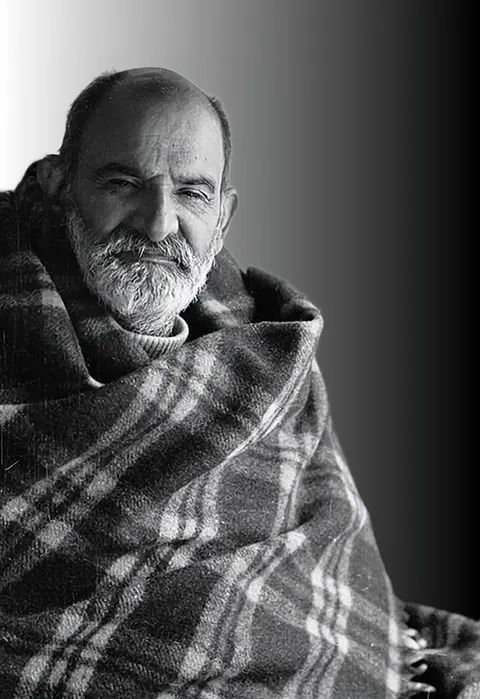
He was born Lakshman Narayan Sharma, around 1900, in Akbarpur village in Firozabad district, Uttar Pradesh, into a well-off Brahmin family. As was common then, he was married at about eleven. Not long after, he left home and became a wandering sadhu.
This is the stretch of life Hanuman Ansh covers: a young boy who has lost his mother, walking across North India looking for God, doing tapasya, sleeping wherever night found him.
The many names
Over the years he was known by many names depending on where he was staying. Lakshman Das, Handi Wala Baba, Tikonia Wala Baba. In Gujarat, at Babania near Morbi, people remember him as Talaiya Baba, because he did sadhana in a pond there.
The name the world knows came from a railway line.
The train that wouldn’t move
This is the story everyone tells, and Ram Dass made it famous in the West. The young sadhu was sitting in a first-class compartment without a ticket. The conductor put him off the train at a village called Neeb Karori, in Farrukhabad district. Baba sat down calmly under a tree. And the train wouldn’t start. The engine was checked, another engine was tried, nothing.
Eventually an officer suggested asking the sadhu back on board. Baba agreed on two conditions: a station would be built for the villagers of Neeb Karori, who walked miles to catch a train, and the railway would treat sadhus with more respect. They agreed, he got back on, and the train moved.
Is it literally true? Devotees believe so, and a station did come up there. Either way, the name stuck: Neeb Karori Baba, which the world later softened to Neem Karoli.
Back home, as a householder
Here is the part that surprises people. His father found him and asked him to come home, and he did. He lived as a family man and had two sons and a daughter. Even after he went back to wandering, he stayed in touch with his family all his life.
For many of us who can’t just leave everything and go to the Himalayas, this matters. He didn’t treat household life as something lesser.
Hanuman ji, always Hanuman ji
If there is one thread through his entire life, it is Hanuman. He built Hanuman temples wherever he settled, more than a hundred of them by some counts, and the Hanuman Chalisa was sung around him constantly. Devotees came to see him as an ansh, a part, of Hanuman ji himself, which is exactly where the film’s title comes from.
If you want to sing along the way his devotees did, here is the Hanuman Chalisa with lyrics and audio. And the Hanuman page has more about why Tuesdays and Saturdays are his.
Kainchi Dham
In 1964, a Hanuman temple and ashram came up at Kainchi, on the road between Nainital and Almora, where two hairpin bends cross like a pair of scissors (kainchi) above the Shipra stream. Baba spent much of his last decade here and at his ashram in Vrindavan.
The temple’s founding day, 15 June, is still the big day at Kainchi. Lakhs of people come, and the malpua prasad is famous. If you’re planning a trip, go on a weekday outside June, reach early, and know that parking fills up quickly now that the whole country has discovered the place. Our Kainchi Dham guide covers timings, how to reach, the 15 June mela and where to stay, and the temples of Uttarakhand guide covers the rest of the region.
The Americans who came looking
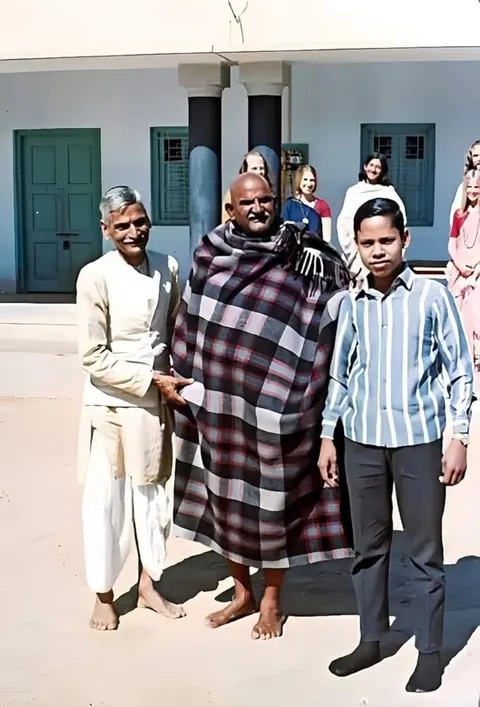
In the late 1960s, a Harvard psychologist called Richard Alpert came to India, restless and searching. In 1967 he met Maharaj-ji, who, the story goes, told him private things about his mother that nobody could have known. Alpert went home as Ram Dass, and his 1971 book Be Here Now sent a whole generation of Americans looking for this man in a blanket.
Among those who came in those years were Krishna Das, now a well-known kirtan singer, and Larry Brilliant, who later worked on the WHO smallpox programme in India. Years after Baba’s death, a young Steve Jobs travelled to Kainchi, and decades later Mark Zuckerberg visited on Jobs’s advice. That’s why you see his photo in so many unlikely places in the West.
But it’s worth remembering that for almost all of his life, most of the people around him were ordinary Indian families from UP and the hills. The Americans were a small chapter, just a well-documented one.
What he actually taught
Maharaj-ji didn’t give long discourses. When people asked how to reach God, the answer was usually some version of this:
- Love everyone.
- Serve everyone.
- Feed everyone.
- Remember God.
Feeding people was a big deal to him. Wherever he was, there was food, and nobody who came was sent away hungry. He also said, again and again, that it is better to see God in everyone than to go looking for miracles.
His last day
On 10 September 1973 he took the train from Kathgodam towards Agra, then went on to Vrindavan. He fell ill on the way, was taken to hospital there, and left his body in the early hours of 11 September 1973. His last words, according to people with him, were “Jaya Jagadish Hare”, a line many of us know from Om Jai Jagdish Hare.
His samadhi is at the Vrindavan ashram.
Should you watch the film?
If you have elders at home who’ve been hearing about it, yes, take them. It is gentle, clean, and made with obvious love. Just know that it’s the first part of a trilogy, so it ends before the Kainchi years most people know. The second part, reportedly about his time around Agra and Mathura, is already in the works.
And if the film makes you curious, the best next step isn’t another film. It’s the Hanuman Chalisa, sung slowly, with whoever is sitting next to you. That’s what he’d have told you to do anyway.
Frequently asked questions
Which film on Neem Karoli Baba became a hit in 2026?
Hanuman Ansh, written and directed by Vishal Chaturvedi, released in India on 7 August 2026. Made for about ₹2 crore, it grew on word of mouth and crossed ₹300 crore worldwide by mid-September, according to trade reports.
Is Hanuman Ansh a true story?
It is based on the early life of Neem Karoli Baba, then called Lakshman Narayan Sharma, and his years as a wandering sadhu. Like any biopic it dramatises events, and some episodes come from devotees' accounts rather than written records.
Where was Neem Karoli Baba born?
In Akbarpur village in Firozabad district, Uttar Pradesh, around 1900, into a Brahmin family. His birth name was Lakshman Narayan Sharma.
When did Neem Karoli Baba leave his body?
In the early hours of 11 September 1973, in a hospital in Vrindavan. His samadhi is at the Vrindavan ashram on the Parikrama Marg. If you go, our **[Vrindavan guide](/places/vrindavan/)** covers the ashram and the town's great temples.
Why is the Kainchi Dham mela held on 15 June?
15 June marks the founding day of the Hanuman temple at Kainchi Dham, near Nainital. Lakhs of devotees come for darshan and malpua prasad that day.
Will there be a second part of Hanuman Ansh?
Yes. The film is planned as the first of a trilogy, and work on the second part, covering Baba's years around Agra and Mathura, was reported to have begun in September 2026.